How to Identify a Real Gemstone: A Complete Guide to Avoiding Fakes and Treated Stones

How to Identify a Real Gemstone: A Complete Guide to Avoiding Fakes and Treated Stones
Every year, thousands of buyers across India spend their hard-earned money on gemstones, hoping to unlock the astrological benefits of a Rashi Ratna (zodiac stone) like a Blue Sapphire, Emerald, or Ruby.
Unfortunately, many discover months later that they were sold a synthetic, heat-treated, or glass-filled stone. While it may look beautiful, a treated gemstone carries zero astrological energy.
At Trishul Gems, based in Mumbai’s diamond district, we specialize in authentic, astrologically potent gemstones. We believe every buyer deserves complete transparency. Here is our expert guide on how to identify a real gemstone and protect yourself from common market scams.
The Danger of “Home Testing” Methods
If you search online for “how to identify a real gemstone,” you will find dozens of DIY methods: the scratch test, the water test, holding it to the light, or seeing if it “stays cool.”
Do not rely on these tests.
Modern synthetic gemstones and treated stones are engineered specifically to pass visual inspections. A lab-created Emerald has the exact same chemical composition as a natural Emerald. A heavily heat-treated Blue Sapphire will feel just as cool to the touch as an unheated one. Worse, tests like the “scratch test” can permanently damage your stone.
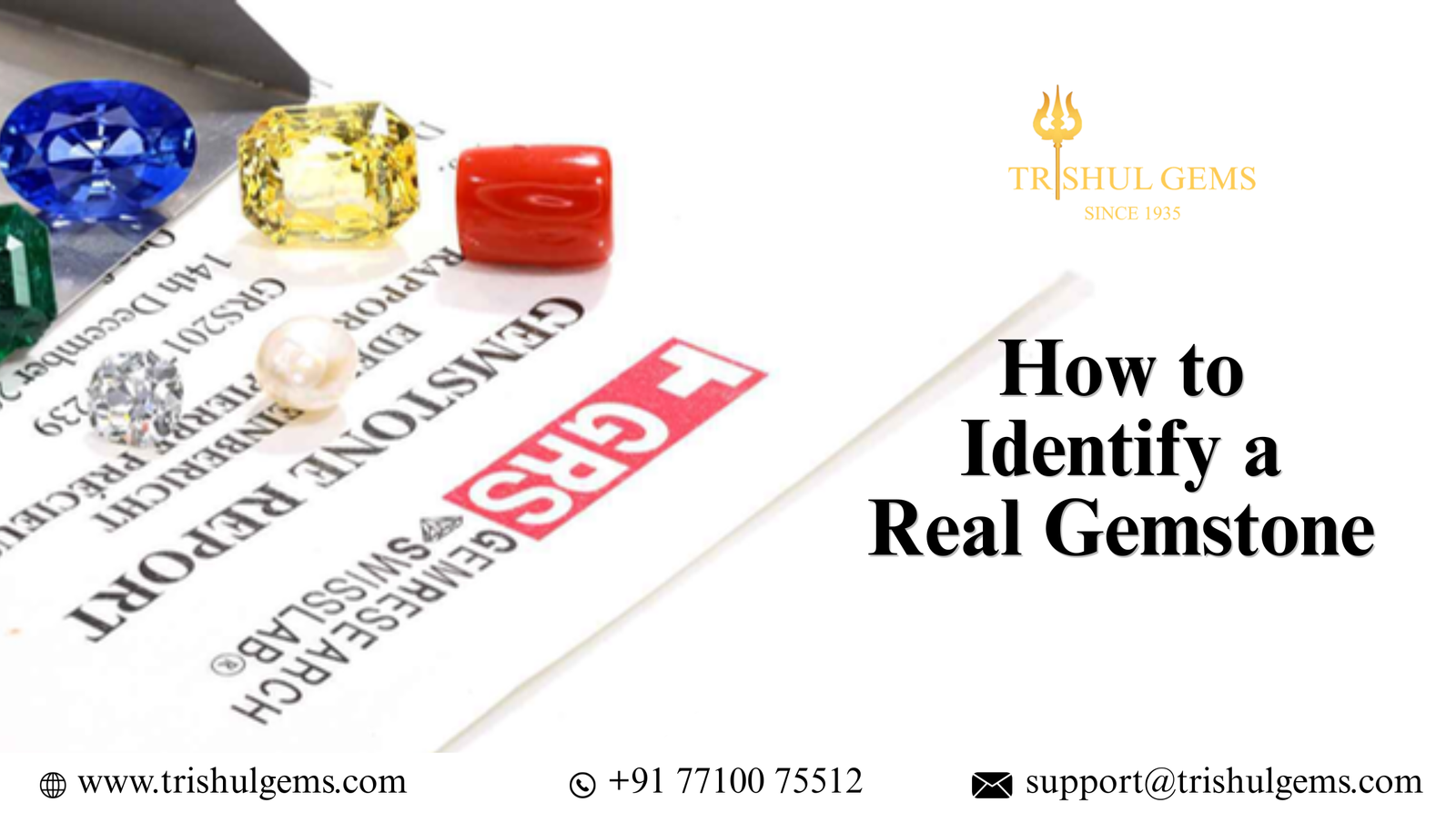
There is only one foolproof way to identify a genuine gemstone: A recognized laboratory certificate.
How to Read a Gemstone Certificate Like an Expert
When buying a precious gemstone, the seller’s word is not enough. You must ask for a certificate from an independent, government-recognized gemological laboratory (such as GII, IGI, IIGJ, or GIA).
Do not accept “in-house” certificates printed by the jewelry store. Once you have a legitimate lab certificate in hand, here are the three fields you must check:
1. Species and Variety
This confirms you are getting the stone you paid for. For example, if you are buying a Yellow Sapphire (Pukhraj), the certificate must explicitly state:
- Species: Corundum
- Variety: Natural Yellow Sapphire
- Warning: If the species says “Quartz,” you are being sold a cheap Citrine imitation.
2. Treatment / Comments (The Most Critical Step)
This is where most buyers get cheated. A stone can be 100% natural, but if it has been treated, it is useless for Vedic astrology. The treatment section must say:
- “No indications of heating”
- “Unheated”
- “No treatment”
Any mention of “heat treatment,” “lead-glass filling,” or “beryllium diffusion” means the stone’s natural crystal structure has been destroyed. (Note: For Emeralds, minor ‘F1’ natural oiling is a standard, acceptable practice).
3. Online Verification (QR Code or Report Number)
Every legitimate certificate carries a unique Report Number. Go to the issuing laboratory’s official website (e.g., IGI or GIA) and type in the number. The digital report should perfectly match the physical certificate and the stone in front of you.
Common Gemstone Scams to Watch Out For
Different gemstones are subjected to different deceptive treatments. Keep this quick-reference guide handy when shopping:
| Gemstone | Common Deceptions | What the Certificate MUST Say |
|---|---|---|
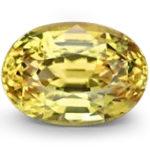
| Yellow Sapphire (Pukhraj) | Selling cheap Citrine (Quartz) as Sapphire; Heavy heat treatments | Species: Corundum, Variety: Yellow Sapphire, Unheated |
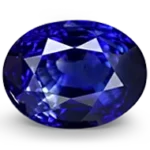
| Blue Sapphire (Neelam) | Heat-treated for color; glass-filled to hide internal cracks | Corundum, Blue Sapphire, No indications of heating |
| Ruby (Manik) | Lead-glass filling to make low-quality stones look clear and expensive | Corundum, Ruby, No fracture filling, Unheated |
| Emerald (Panna) | Synthetic resin filling; dyed green quartz sold as Panna | Beryl, Emerald, F1 oiling only |
3 Red Flags When Buying a Gemstone
If you notice any of these warning signs, pause your purchase and ask hard questions:
- The Price is “Too Good to Be True”: Price is the most consistent indicator of quality. Natural, unheated gemstones are rare. If someone is offering a flawless, unheated Kashmir Blue Sapphire for a few thousand rupees, it is guaranteed to be synthetic or heavily treated.
- Reluctance to Show the Certificate: A reputable dealer has nothing to hide. They will show you the lab certificate before you even ask. If the seller says they will “send the certificate later” or tries to rush the sale, walk away.
- Buying from a General Jeweler instead of a Specialist: Jewelers source stones for ornamental beauty (meaning they prefer treated, flawless-looking stones). Astrological specialists source stones for energetic potency (meaning they only accept natural, unheated stones). Always buy astrological gems from a specialist.
Buy with Complete Confidence at Trishul Gems
You should never have to guess if your gemstone is real.
At Trishul Gems, we specialize exclusively in 100% natural, untreated, and astrologically potent gemstones. We don’t just sell stones; we educate our buyers. Every precious gemstone in our collection comes with a verified laboratory certificate from trusted institutions, guaranteeing its purity.
We also offer expert in-house Vedic astrology consultations to ensure the stone you choose is perfectly aligned with your birth chart (Kundli).
Ready to find your perfect Rashi Ratna?
📍 Visit Our Mumbai Flagship Store: Trishul Gems, Opera House, Girgaon, Mumbai, Maharashtra 400004📞 Get Expert Astro-Advice: +91 77100 75512
✉️ Email Us: support@trishulgems.com
🌐 Shop the Certified Collection: trishulgems.com
 Blue Sapphire
 Yellow Sapphire
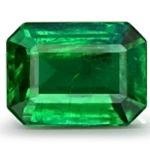 Emerald (Panna)
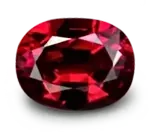 Ruby (Manik)
 Red Coral
 Cats Eye
 Hessonite
 Pearl
Pearl White Sapphire
 Amethyst
 Citrine
 Fire Opal
 Garnet
 Iolite
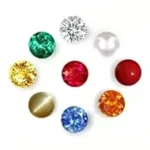 Navratna
 Opal
Opal Peridot
 Pitambari Neelam
 Turquoise
 White Coral
 Yellow Topaz
 Zircon
 Alexandrite
 Burmese Ruby
 Cornflower Blue Sapphire
 Colombian Emeralds
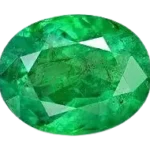 No Oil Emerald
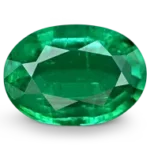 Panjshir Emerald
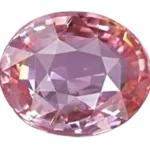 Padparadscha Sapphire
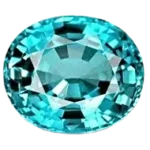 Paraiba Tourmaline
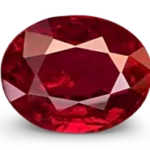 Pigeon Blood Ruby
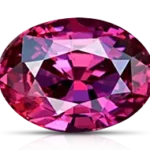 Pink Sapphire
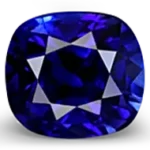 Royal Blue Sapphire
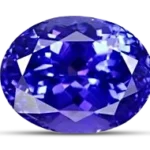 Tanzanite
 Amber
Amber Ametrine
 Aquamarine
 Blue Topaz
 Blue Zircon
 Kyanite
 Lapis Lazuli
 Moldavite
 Moonstone
 Spinel
 Star Ruby
 Tourmaline