
White Sapphire or Natural Diamond? Here’s How to Tell Them Apart

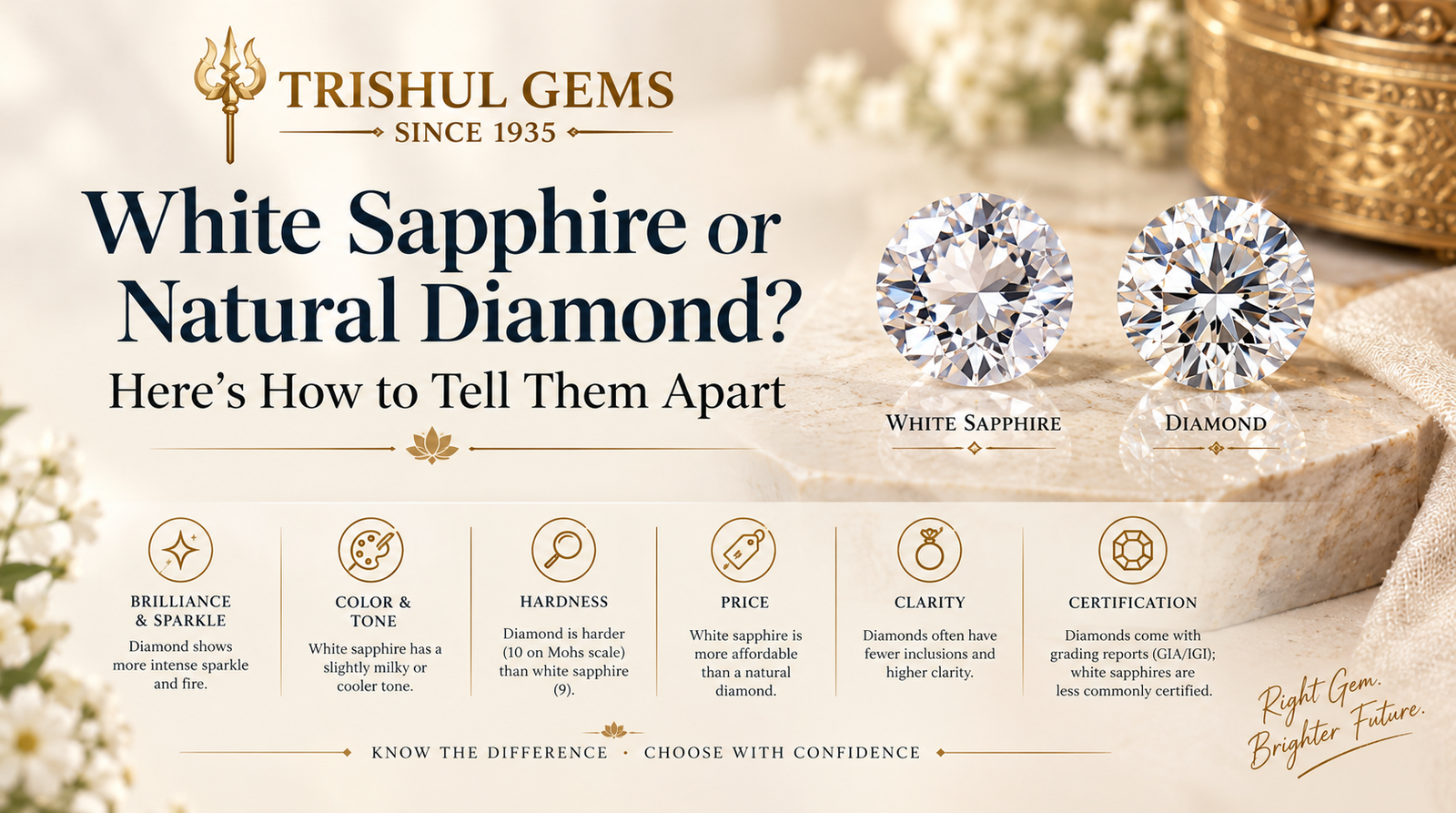
When designing an engagement ring or selecting a classic piece of fine jewelry, colorless and white gemstones are timeless favorites. At the very top of that list are two stunning minerals: the Natural Diamond and the White Sapphire.
At a quick glance, both stones offer a brilliant, sparkling white appearance that can easily capture anyone’s heart. However, beneath their glistening surfaces lie completely different chemical compositions, rarity levels, price points, and optical behaviors.
Whether you are looking for an ethical diamond alternative or exploring the astrological substitutes in Vedic tradition, here is your complete guide on how to tell White Sapphire and Natural Diamond apart.
1. Composition and Mineral Family
-
Natural Diamond: Formed deep within the earth’s mantle under extreme heat and pressure over billions of years, a diamond is composed entirely of pure, crystallized carbon. It is the hardest known natural substance on Earth.
-
White Sapphire: White sapphire belongs to the corundum mineral family (aluminum oxide). While natural white sapphires form within metamorphic and igneous rocks, they are chemically distinct from carbon-based diamonds and are often used in Vedic astrology as an alternative gemstone for Venus (Shukra).
2. Hardness and Durability (Scratch Resistance)
Both stones are exceptionally durable and suitable for daily wear, but there is a distinct difference on the Mohs hardness scale:
-
Natural Diamond: Scores a perfect 10 out of 10 on the Mohs scale. It cannot be scratched by anything other than another diamond.
-
White Sapphire: Scores a 9 out of 10 on the Mohs scale. While exceptionally tough and highly resistant to scratching, over decades of heavy daily wear alongside harder stones, it may show minor surface wear compared to a diamond.
3. Brilliance, Fire, and Light Dispersion
The way light interacts with each stone is one of the easiest ways to distinguish between them:
-
Natural Diamond: Exhibits strong “fire” (dispersing white light into vibrant rainbow prismatic flashes) alongside brilliant white scintillation.
-
White Sapphire: Offers a softer, more classic, velvety white brilliance. It shows less rainbow fire and more crisp white light reflection, giving it a distinctive, understated elegance.
4. Rarity, Value, and Investment
-
Natural Diamond: Due to global market rarity, grading complexities (the 4Cs), and intense mining processes, natural diamonds command significant investment value and prestige.
-
White Sapphire: As a precious gemstone, high-grade natural white sapphires hold intrinsic value and offer a luxurious, ethical aesthetic at a fraction of the cost of a comparable diamond.
White Sapphire vs. Natural Diamond: Quick Comparison Table
| Feature | Natural Diamond | White Sapphire |
| Material | Pure Crystalized Carbon | Corundum (Aluminum Oxide) |
| Mohs Hardness | 10 / 10 (Maximum durability) | 9 / 10 (Extremely durable) |
| Sparkle / Fire | High rainbow dispersion & brilliance | Soft, classic, velvety white brilliance |
| Astrological Use | Rare for traditional remedies | Used as a Venus (Shukra) substitute |
| Value Level | Premium luxury investment tier | Accessible precious gemstone tier |
Choose Certified Elegance with Trishul Gems
Whether you prefer the unyielding brilliance of a natural diamond or the classic, serene beauty of an unheated white sapphire, absolute authenticity is essential.
At Trishul Gems, we hand-select and inspect every gemstone to ensure maximum brilliance, flawless structural integrity, and trusted laboratory certification. Explore our fine collections or buy natural certified gemstones online today.
-
Website: trishulgems.com
-
Contact & Support: Connect with our experts online for personalized jewelry guidance, custom settings, and orders.
 Blue Sapphire
 Yellow Sapphire
 Emerald (Panna)
 Ruby (Manik)
 Red Coral
 Cats Eye
 Hessonite
 Pearl
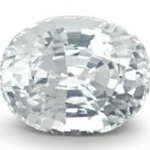 White Sapphire
 Amethyst
 Citrine
 Fire Opal
 Garnet
 Iolite
 Navratna
 Opal
 Peridot
 Pitambari Neelam
 Turquoise
 White Coral
 Yellow Topaz
 Zircon
 Alexandrite
 Burmese Ruby
 Cornflower Blue Sapphire
 Colombian Emeralds
 No Oil Emerald
 Panjshir Emerald
 Padparadscha Sapphire
 Paraiba Tourmaline
 Pigeon Blood Ruby
 Pink Sapphire
 Royal Blue Sapphire
 Tanzanite
 Amber
 Ametrine
 Aquamarine
 Blue Topaz
 Blue Zircon
 Kyanite
 Lapis Lazuli
 Moldavite
 Moonstone
 Spinel
 Star Ruby
 Tourmaline